Ammonium Chloride is made in our
Automatic Vacuum Evaporated Plant. Grades offered are as under:
Ammonium Chloride Non-Caking used in manufacture of
Dry Cells/Batteries.
|
Particulars |
Ammonium Chloride Pure Grade Non-Caking |
|
Appearance (NH4Cl)
|
White Crystalline Powder |
|
Assay of (NH4Cl on Dry Basis) |
99%
min. |
|
Moisture |
1%
max. |
|
pH of 5% solution |
4
to 6 |
|
Iron |
25
ppm max. |
|
Matter Insoluble in water |
0.01% max. |
|
Sulphate |
0.1% max. |
|
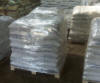
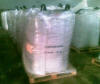
Packing |
In
50 Kg HDPE bag with HMHDPE liner |
We also offer Ammonium
Chloride IP,
Ammonium Chloride
BP,
Ammonium Chloride
USP or Extra Pure made at our FDA approved world class plant
Anmol Chemicals Taloja an
ISO-9001-2008 Certified Company
using
standard GMP techniques
Ammonium Chloride BP USP ACS AR Analytical Reagent & Food Grade
INDIAN PHARMACOPOEIA
AMMONIUM CHLORIDE
(NH4Cl)
MOLECULAR WEIGHT –
53.49
|
DESCRIPTION
|
COLOURLESS CRYSTALS OR WHITE, CRYSTALLINE POWDER.
|
|
|
|
|
SOLUBILITY
|
FREELY SOLUBLE IN WATER; SPARINGLY
SOLUBLE IN
ETHANOL (95%). |
|
|
|
|
STANDARD |
CONTENT NOT LESS THAN 99.0%
AND NOT MORE THAN 100.5% OF NH4Cl CALCULATED
WITH REFERENCE TO THE DRIED SUBSTANCE. |
|
|
|
|
IDENTIFICATION |
A 10% w/w SOLUTION GIVES THE
REACTIONS OF AMMONIUM SALTS AND OF CHLORIDES. |
|
|
|
|
CLARITY
AND |
A 10% w/w SOLUTION IS CLEAR & COLOURLESS.
|
|
COLOUR OF SOLN. |
|
|
|
|
|
pH
|
BETWEEN 4.5 AND 6.0, DETERMINED IN A 5.0 W/V SOLUTION.
|
|
|
|
|
ARSENIC
|
NOT MORE THAN 4 PARTS PER MILLION. |
|
|
|
|
HEAVY METALS
|
NOT MORE THAN 10 PARTS PER MILLION. |
|
|
|
|
MAGNESIUM &
|
NOT MORE THAN 1%. |
|
ALKALI SALTS |
|
|
|
|
|
IRON
|
NOT MORE THAN 20 PARTS PER MILLION. |
|
|
|
|
SULPHATE
|
NOT MORE THAN 150 PARTS PER MILLION. |
|
|
|
|
SULPHATED ASH |
NOT MORE THAN 0.1%. |
|
|
|
|
CALCIUM
|
NOT MORE THAN 200 PARTS PER MILLION. |
|
|
|
|
THIOCYANATE
|
TO PASS THE TEST. |
|
|
|
|
LOSS ON DRYING |
NOT MORE THAN 1%, DETERMINED ON 1 GM BY DRYING IN AN
OVEN AT 1050C. |
Ammonium Chloride British Pharmacopoeia (B.P.) Grade
|
Particulars |
BP Specification |
Our Typical Product |
|
Dry Basis Assay |
99-100.5% |
99.9% |
|
Characteristics |
Colourless Crystals or white crystalline powder; odourless
|
White, crystalline powder; odourless
|
|
Solubility |
Soluble in 2.7 parts of water |
|
Identification |
Yields the reactions characteristic of ammonium salts and
of chlorides |
Yields the reactions characteristic of ammonium salts and of
chlorides |
|
Acidity or alkalinity |
To conform to specified test |
Passes test |
|
Clarity and Colour of Solution |
Clear & colourless solution (10% w/v)
|
Clear & colourless solution (10% w/v)
|
|
Calcium |
200 ppm |
30 ppm |
|
Heavy Metals |
10 ppm |
Nil |
|
Iron |
20 ppm |
5 ppm |
|
Bromide and iodide |
To conform to specified test |
Passes test |
|
Sulphate |
150 ppm |
20 ppm |
|
Loss on Drying |
1% |
0.05% |
|
Sulphated Ash |
0.1% |
0.009% |
Ammonium Chloride United States Pharmacopoeia (U.S.P.)
Grade
|
Particulars |
Our Typical Product |
USP Specification |
|
Dry Basis Assay |
99.9% |
99.5-100.5% |
|
pH of 5% Solution |
5.3 |
4.6-6 |
|
Sulphated Ash |
0.009% |
0.1% (residue on ignition) |
|
Heavy Metals as Pb |
Nil |
0.001% |
|
Loss on Drying |
0.1% |
0.5% (4 hours on silica gel) |
|
Thiocyanate |
Passes test |
To pass the test |
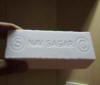
Ammonium Chloride Bars or Bricks of 500gm each &
100gm Tablet.
Ammonium chloride (NH4Cl) Bars or Bricks
& Tablets also Sal Ammoniac, Salmiac, Salmiak, Nushadir Salt, Navsagar,
Zalmiak, Sal Armagnac, Sal Armoniac, Salmiakki, Salamaka, Salmiak and Salt
Armoniack
Ammonium
Chloride – General Information
|
Ammonium
chloride |
|
IUPAC name |
Ammonium chloride
|
|
Identifiers |
|
CAS number |
[12125-02-9]
|
|
Properties |
|
Molecular formula
|
NH4Cl
|
|
Molar mass |
53.49 g/mol |
|
Appearance |
White solid |
|
Density |
1.527 g/cm3
|
|
Melting point
|
338 °C (sublimes)
|
|
Solubility in water
|
29.7 g/100 g water at 0 °C
|
Ammonium chloride (NH4Cl) (also Sal Ammoniac, Salmiac, Salmiak, Nushadir Salt,
Navsagar, Navsar, Nausagar, Nausar, Zalmiak, Sal Armagnac, Sal Armoniac, Salmiakki, Salamaka, Salmiak and
Salt Armoniack) is, in its pure form, a clear white water-soluble crystalline
salt of ammonia. The aqueous solution is mildly
acidic.
Sal
ammoniac is a name of natural, mineralogical form of ammonium chloride
Sources
In nature, the substance occurs
in volcanic regions, forming
on volcanic rocks near fume-releasing vents. The crystals deposit directly from
the gaseous state, and tend to be short-lived, as they dissolve easily in
water.
It is prepared
commercially by reacting ammonia (NH3) with hydrogen chloride (HCl):
NH3 + HCl → NH4Cl
It is also
available as a bye-product of Soda Ash Plant and some other chemical processes.
It is also
found in volcanoes and deep underground.
It sublimes readily but this process involves
dissociation into ammonia and hydrochloric acid followed by reforming of the
compound.
NH4Cl
→ NH3 + HCl
Zinc ammo.cloride is
commonly known as flux, and is used for galvanizing steel. It is 60% NH4Cl and 40%
ZnCl2 in it. It is not necessarily 60:40 ratio of
Ammonium chloride and Zinc Chloride. The ratio is varied as per type of
usage for the flux. However 60:40 is a more running grade. Apart from NH4Cl
& ZnCl2 it also contains galvanizing additives like glycerin, sodium
dichromate, borax etc. For a good write up of Zinc Ammo. Cloride one may visit
Zinc Amm. Cloride Flux
Applications
Ammonium chloride is sold in
blocks (bars or briquettes) at hardware stores for use in cleaning the tip of a
soldering iron and can also
be included in solder as
flux. A principal use of ammonium chloride has
been as a fluxing agent for hot dip galvanizing of steel and in the refining of
zinc. It provides fluxing action by reacting with molten zinc to
form a stable melt containing zinc chloride and ammonium chloride.
It is used as it is or in compound fertilizer. It has higher
concentration of Nitrogen than ammonium sulphate. Nitrification is less rapid
than in urea or ammonium sulphate and this means N losses are lower. Although
it is better known as rice fertilizer, it has been tested and
used on other crops like wheat, barley, sugarcane, maize, fiber crops etc. Of
particular note is its use on palms; increasing the yield
of Copra per tree.
Other uses include a feed
supplement for cattle, in hair shampoo, in textile printing, in
the glue that bonds plywood,
as an ingredient in nutritive media for yeast, in cleaning products, and as cough
medicine. Its expectorant action is caused by irritating action on
the bronchial mucosa. This causes the production of excess respiratory tract
fluid which presumably is easier to cough up. It is also used in an oral acid
loading test to diagnose distal renal tubular acidosis.
It is used in snow treatment, namely on ski slopes at
temperatures above 0 °C, to harden the snow and slow its melting.
Found in nature
and also produced industrially, it has other important uses too.
These include lowering the melting temperatures of certain metals for
manufacturing processes, and as a fertilizer, anti-caking agent and ingredient
in personal care products and pharmaceuticals
In several countries Sal Ammoniac
is used to spice up liquorices-type dark candies (Finland's
Salmiakki, Sweden's
Lakrisal, the Netherlands'
Zoute
drop and the Danish Dracula Piller are popular examples), and as a flavouring for vodkas.
Other uses include electrolyte for plating baths and/or
batteries; fertilizer, personal care product formulations, pharmaceuticals etc.
It is used as an
expectorant, diuretic and systemic acidifying agent. It is used in the treatment
of severe metabolic alkalosis, to maintain the urine at an acid pH in the
treatment of some urinary-tract disorders or in forced acid diuresis.
Ammonium salts are an irritant to
the gastric mucosa and may induce nausea and vomiting.
Electroplating Use: These
days, there are three primary types of acid zinc plating baths: straight
ammonium chloride, straight potassium chloride and mixed ammonium
chloride/potassium chloride. Acid zinc plating systems have several advantages
over alkaline cyanide and alkaline non-cyanide zinc plating systems except that
in acid zinc plating, the electrolyte is extremely corrosive.
Ammonium chloride zinc plating. The ammonium chloride bath is the most
forgiving of the three major types of acid zinc plating because of its wide
operating parameters. The primary drawback of this system is the high level of
ammonia, which can cause problems in wastewater treatment. Ammonia acts as a
chelator, and if the rinse waters are not segregated from other waste streams,
removal of metals to acceptable levels using standard water treatment practices
can be difficult and expensive. Ammonia is also regulated in many communities.
Dry Cell or Batteries: NH4Cl, is a component of dry cell batteries, little storehouses of
energy that power so many of our electrical devices. Batteries permit us to use
electricity even when we are far from an electrical point. With battery power we
can have music while we jog down the street, light while we camp on a moonless
night, and the convenience and accuracy of a pocket calculator.
Galvanizing, Soldering and Tinning Fluxes: NH4Cl s used in fluxes for galvanizing, soldering and tinning. Its ability
to remove oxides and salts from metal surfaces insures good metal to metal
bonding. It has the ability to attack
metal oxides. This reaction is relevant to the utility of NH4Cl as a flux
for soldering - it dissolves oxide coatings exposing the
clean metal surface.
Ammonium Chloride -
Clinical Pharmacology
The ammonium ion (NH4+)
in the body plays an important role
in the maintenance of acid-base
balance. The kidney uses ammonium
(NH4+)
in place of sodium (Na+)
to combine with fixed anions in
maintaining acid-base balance,
especially as a homeostatic
compensatory mechanism in metabolic
acidosis.
When a loss of hydrogen ions (H+)
occurs and serum chloride (Cl−)
decreases, sodium is made available
for combination with bicarbonate
(HCO3−).
This creates an excess of sodium
bicarbonate (NaHCO3)
which leads to a rise in blood pH
and a state of metabolic alkalosis.
The therapeutic effects of
Amm. Cloride depend upon the
ability of the kidney to utilize
ammonia in the excretion of an
excess of fixed anions and the
conversion of ammonia to urea by the
liver, thereby liberating hydrogen
(H+) and
chloride (Cl−)
ions into the extracellular fluid.
The acidification
properties of ammonium chloride are
caused by its dissociation into
chloride and ammonium ions in
vivo. The ammonium cation is
converted by the liver to urea with
the release of a hydrogen ion. This
ion combines with bicarbonate to
form water and carbon dioxide. In
the extracellular fluid, chloride
ions combine with fixed bases and
decrease the alkaline reserves in
the body. The net effects are
decreased serum bicarbonate levels
and a decrease in blood and urine
pH.
The excess chloride
ions presented to the kidney, are
not completely reabsorbed by the
tubules and are excreted with
cations (principally sodium) and
water. This diuretic effect is
usually compensated for by the
kidneys after a few days of therapy.
The veterinary
indications for ammonium chloride
are as a urinary acidifying agent to
help prevent and dissolve certain
types of uroliths (e.g., struvite), to enhance renal
excretion of some types of toxins (e.g.,
strontium) or drugs (e.g.,
quinidine), or to enhance the
efficacy of certain antimicrobials (e.g.,
chlortetracycline, methenamine
mandelate, nitrofurantoin,
oxytetracycline, penicillin G or
tetracycline) when treating urinary
tract infections. Ammonium chloride
has also been used intravenously for
the rapid correction of metabolic
alkalosis.
Indications and Usage
for Ammonium Chloride
Ammonium Chloride Injection, USP,
after dilution in isotonic sodium
chloride injection, may be indicated
in the treatment of patients with
(1) hypochloremic states and (2)
metabolic alkalosis.
Contraindications
Ammo. Chlo.
is contraindicated in patients with
severe hepatic disease as ammonia
may accumulate and cause toxicity.
In general, it should
not be administered to uremic
patients as it may intensify the
metabolic acidosis already existing
in some of these patients. It should not be used alone in
patients with severe renal
insufficiency and metabolic
alkalosis secondary to vomiting
hydrochloric acid as sodium
depletion can occur. In these cases,
sodium chloride repletion with or
without ammonium chloride
administration should be performed
to correct both sodium and chloride
deficits. Ammonium chloride is
contraindicated in patients with urate calculi or respiratory
acidosis and high total CO2 and
buffer base. It
cannot alone correct hypochloremia
with secondary metabolic alkalosis
due to intracellular potassium
chloride depletion. Potassium
chloride must be administered to
these patients.
It should not be
administered when metabolic
alkalosis due to vomiting of
hydrochloric acid is accompanied by
loss of sodium (excretion of sodium
bicarbonate in the urine).
It is
reported to be physically compatible
with all commonly used IV
replacement fluids and potassium
chloride.
It is incompatible
with: codeine phosphate,
dimenhydrinate, methadone HCl,
nitrofurantoin sodium, sulfisoxazole
diolamine, and warfarin sodium. It
is also reportedly incompatible with
alkalis and their hydroxides.
Precautions
Patients receiving Ammo.
Chlo. should be constantly
observed for symptoms of ammonia
toxicity (pallor, sweating,
retching, irregular breathing, bradycardia, cardiac arrhythmias,
local and general twitching, tonic
convulsions and coma).
It should be used with caution in
patients with high total CO2
and buffer base secondary to primary
respiratory acidosis.
Intravenous administration should
be slow to avoid local irritation
and toxic effects.
When exposed to low temperatures,
concentrated solutions of Ammonium
Chloride may crystallize. If
crystals are observed, the vial
should be warmed to room temperature
in a water bath prior to use.
Do not administer unless the
solution is clear and seal is
intact. Discard unused portion.
Pregnancy
Category C:
Animal reproduction studies have
not been conducted with this item. It is also not known
whether it can cause
fetal harm when administered to a
pregnant woman or can affect
reproduction capacity. It should be given to a
pregnant woman only if clearly needed.
Adverse Reactions
Rapid intravenous
administration of Ammo. Cloride may be
accompanied by pain or irritation at
the site of injection or along the
venous route.
Reactions which may occur because
of the solution or the technique of
administration include febrile
response, infection at the site of
injection, venous thrombosis or
phlebitis extending from the site of
injection, extravasation and
hypervolemia (from large volume
diluent).
If an adverse reaction does
occur, discontinue the infusion,
evaluate the patient, institute
appropriate therapeutic
countermeasures and save the
remainder of the fluid for
examination if deemed necessary.
Overdosage
Overdosage of Ammo. Cloride
has resulted in a serious degree of
metabolic acidosis, disorientation,
confusion and coma. Should metabolic
acidosis occur following overdosage,
the administration of an
alkalinizing solution such as sodium
bicarbonate or sodium lactate will
serve to correct the acidosis.
Ammonium Chloride
Dosage and Administration
Ammonium Chloride Injection, USP
is administered intravenously and
must be diluted before use.
Solutions for intravenous infusion
should not exceed a concentration of
1% to 2% of NH4Cl.
Dosage is dependent upon the
condition and tolerance of the
patient. It is recommended that the
contents of one to two vials (100 to
200 mEq) be added to 500 or 1000 mL
of isotonic (0.9%) sodium chloride
injection. The rate of intravenous
infusion should not exceed 5 mL per
minute in adults (approximately 3
hours for infusion of 1000 mL).
Dosage should be monitored by
repeated serum bicarbonate
determinations.
Parenteral drug products should
be inspected visually for
particulate matter and discoloration
prior to administration, whenever
solution and container permit.
Health Hazards: For
normal industrial uses and with good hygienic practices, there are no known
hazards with ammonium chloride. The American Conference of Governmental
Industrial Hygienists (ACGIH) recommends an 8-hour TLV®-TWA of 10 mg/m3 ammonium
chloride fumes in air to prevent irritation of respiratory passages.
Safety Precautions: Wash thoroughly after handling. The use of
impervious or rubber gloves and chemical safety goggles are recommended.
First Aid: In case of eye contact, immediately flush eyes with
plenty of water for at least 15 minutes. Call a physician.
Storage & Handling: Ammonium chloride granular is a dry,
crystalline solid and presents no unusual handling problems. It should be stored
in a clean, dry place away from strong alkalis or strong oxidants.
For an exhaustive writeup on the subject go to
University of Ammonium Chloride
For
more information contact manufacturer at:
MUBY CHEMICALS
S-8,
SARIFA
MANSION,
2ND
FLANK ROAD,
CHINCHBUNDER, MUMBAI 400009,
INDIA.
TEL: (OFFICE)
91-22-23770100, 23774610, 23726950, 23723564. FAX: 91-22-23728264.
e-mail:
info@mubychem.com
Cell Call to Anmol: +91-9821870100
or Ambrish: +91-9821570100


Copyright and Usual Disclaimer is
Applicable.
Last updated
November 21, 2009
University of Phase Change Material
Zinc Chloride BP USP IP ACS AR Analytical Reagent
Calcium Chloride BP USP IP ACS AR Analytical Reagent Food Grade
Potassium Chloride BP USP IP ACS AR Analytical Reagent Food Grade
Sodium Acetate BP USP IP ACS AR Analytical Reagent Food Grade
Sodium Thiosulfate or Sodium Thiosulphate BP USP IP ACS AR Analytical
Reagent Food Grade
Ammonium Sulphate or Ammonium Sulfate ACS AR
Analytical Reagent
Food Grade
Manganese
Chloride ACS & Food Grade
Magnesiumchloride BP USP IP ACS Food
Calcium Carbonate BP USP IP ACS Food Grade
Ammonium Chloride
Zinc Chloride
Calcium Chloride
Potassium Chloride
Sodium. Acetate
Sodium Thiosulphate or Sodium Thiosulfate
Sodium Chloride
Mono Ammonium Phosphate and Di Ammonium Phosphate
Mono Sodium Phosphate Di Sodium Phosphate & Tri Sodium Phosphate
Mono Potassium Phosphate, Di Potassium Phosphate & Tri Potassium Phosphate
Iron Sulphide or Ferrous Sulfide
Sodium Bromide
Potassium Bromide
Zinc Sulphate or Zinc Sulfate
Sodium Diacetate
PCB Etchat or Copper Etchant or Ammonical Etchant
Zinc Ammonium Chloride Flux