|
|
Muby Chemicals and a few more manufacturing units are owned by Kamdar Family. Mubychem Group is the pioneer manufacturer of Potassium Bromide etc. in India. Established in 1976, we have led a quality revolution across our product range. Mubychem group has several manufacturing facilities spread across Western India. Our associated facility is Food & Drug Administration (FDA) GMP approved to manufacture a wide range of pharmaceutical excipients and food chemicals. We have ISO-9001-2008 Certification ISO-22000-2005 HACCP Certification, Kosher and Halal Certification. We have European "Reach" Registration for exports.
Email This Page Info to a Colleague or Yourself
----
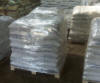
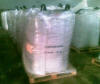
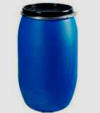
KBr, Potassium Bromide Manufacturers
CAS number: 7758-02-3; Molecular weight 119; Molecular formula: KBr
Potassium Bromide BP USP IP ACS AR Manufacturers
Potassium bromide (KBr) is a salt, widely used as an anticonvulsant and a sedative in the late 19th and early 20th centuries. Its action is due to the bromide ion (sodium bromide is equally effective). It is presently used as a veterinary drug, as an antiepileptic medication for dogs and cats. It is a white crystalline powder, soluble in water. In a dilute aqueous solution, potassium bromide tastes sweet, at higher concentration it tastes bitter, and when most concentrated it tastes salty to humans (these effects are due mainly to potassium ion; sodium bromide merely tastes salty at all concentrations). In high concentration potassium bromide strongly irritates the gastric mucous membrane, leading to nausea and sometimes vomiting (again this effect is typical of all soluble potassium salts).
Chemical properties
Potassium bromide is a typical ionic salt which is fully dissociated and near pH 7 in aqueous solution. It serves as a source of bromide ions- this reaction is important for the manufacture of silver bromide for photographic film:
KBr (aq) + AgNO3(aq) → AgBr (s) + KNO3(aq)
Aqueous bromide Br- will also form complexes when reacted with some metal halides such as copper (II) bromide:
2 KBr (aq) + CuBr2(aq) → K2[CuBr4](aq)
Potassium bromide is used extensively in photography. It is also sometimes used as a bromide source in organic synthesis, since it is less hygroscopic than sodium bromide. In the laboratory it is commonly used in infrared spectroscopy. The sample to be tested is crushed up with a large excess of KBr, and then the mixture is crushed to form a tablet which is inserted into the spectrophotometer.
Preparation
A traditional method for the manufacture of KBr is the reaction of potassium carbonate with a bromide of iron, Fe3Br8, made by treating scrap iron under water with excess bromine:
4 K2CO3 + Fe3Br8 → 8 KBr + Fe3O4 + 4 CO2
Medical and Veterinary
The anticonvulsant properties of potassium bromide were first noted by Sir Charles Locock at a meeting of the Royal Medical and Chirurgical Society in 1857. Bromide can be regarded as the first effective medication for epilepsy. At the time, it was commonly thought that epilepsy was caused by masturbation. Locock noted that bromide calmed sexual excitement and thought this was responsible for his success in treating seizures. There would not be a better drug for epilepsy until phenobarbital in 1912. It was often said the British Army laced the soldiers' tea with bromide to quell sexual arousal, however because doing so would also diminish alertness in battle it is likely to be an urban legend and similar stories were also told about a number of substances.
Potassium bromide is used to treat epilepsy in dogs, either as first-line treatment or in addition to phenobarbital when the seizures are not adequately controlled with phenobarbital alone. Use of bromide in cats is limited because it carries a substantial risk of causing lung inflammation (pneumonitis) in this species.
It is not approved by the US Food and Drug Administration (FDA) for use in humans to control seizures. In Germany it continues to be approved for use as an antiepileptic drug for humans, particularly children and adolescents. These indications include severe forms of generalized tonic-clonic seizures, early-childhood-related Grand-Mal-seizures, and also severe myoclonic seizures during childhood. Adults who have reacted positively to the drug during childhood/adolescence may continue treatment. KBr is sold under the brand name Dibro-Be mono (RX-only). When used for proper indications it shows promising results. The drug has almost complete bioavailability and an extremely long half-life of 6 weeks. One tablet contains 850 mg of potassium bromide. KBr is not known to interfere with the absorption or excretion of any other anticonvulsant.
The therapeutic index is very small for bromide. As with other antiepileptics, sometimes even therapeutic doses give rise to intoxication. Often indistinguishable from 'expected' side-effects, these include:
Loss of appetite, nausea/emesis, lethargy, propensity to sleep during the daytime, depression, loss of concentration and memory, confusion, headache, and
Bromism (central reactions reaching from somnolence to coma, cachexia, exicosis, loss of reflexes or pathologic reflexes, clonic seizures, tremor, ataxia, loss of neural sensitivity, paresis, papillar edema of the eyes, abnormal speech, cerebral edema, delirium, aggressiveness, psychoses)
Acne-form dermatitis and other forms of skin disease may also be seen, as well as mucous hypersecretion in the lungs. Asthma and rhinitis may worsen. Rarely, tongue disorder, aphten, bad breath, and obstipation occur.
Optics
KBr is transparent from the near ultraviolet to long wave infrared wavelengths (0.25-25 µm). KBr has no significant optical absorption lines in its high transmission region. It is used for optical windows and prisms. It must be kept in a dry environment due to high solubility and hygroscopic nature. The refractive index is about 1.55 at 1.0 µm.
In infrared spectroscopy, samples are analyzed by grinding with KBr powder, and pressing into a disc. Alternatively, the samples may be analyzed as a liquid film (neat, as a solution, or in a mull with Nujol) between two polished KBr discs.
Potassium BromidePotassium Bromide Manufacturers:
MUBY CHEMICALS
S-8, SARIFA MANSION, 2ND FLANK ROAD, CHINCHBUNDER, MUMBAI 400009, INDIA
TEL: (OFFICE) 91-22-23770100, 23774610, 23726950, 23723564. FAX: 91-22-23728264e-mail: info@mubychem.com
USA & Canadian Customers may e-mail: usa@mubychem.com
Copyright and Usual Disclaimer is Applicable.
Last updated: 03 June, 2014.Exports to USA Canada UAE Europe South Africa Tanzania Kenya Uganda Egypt Nigeria Turkey Australia Korea Mexico Brazil Argentina Chile Dubai etc.
God Grant me Serenity
To Accept the things that I can not Change
Courage to Change the things that I can Change
and Wisdom to know the Difference
Wise men never sit and cry over their loss. But work on to redress the same.